04 · Live
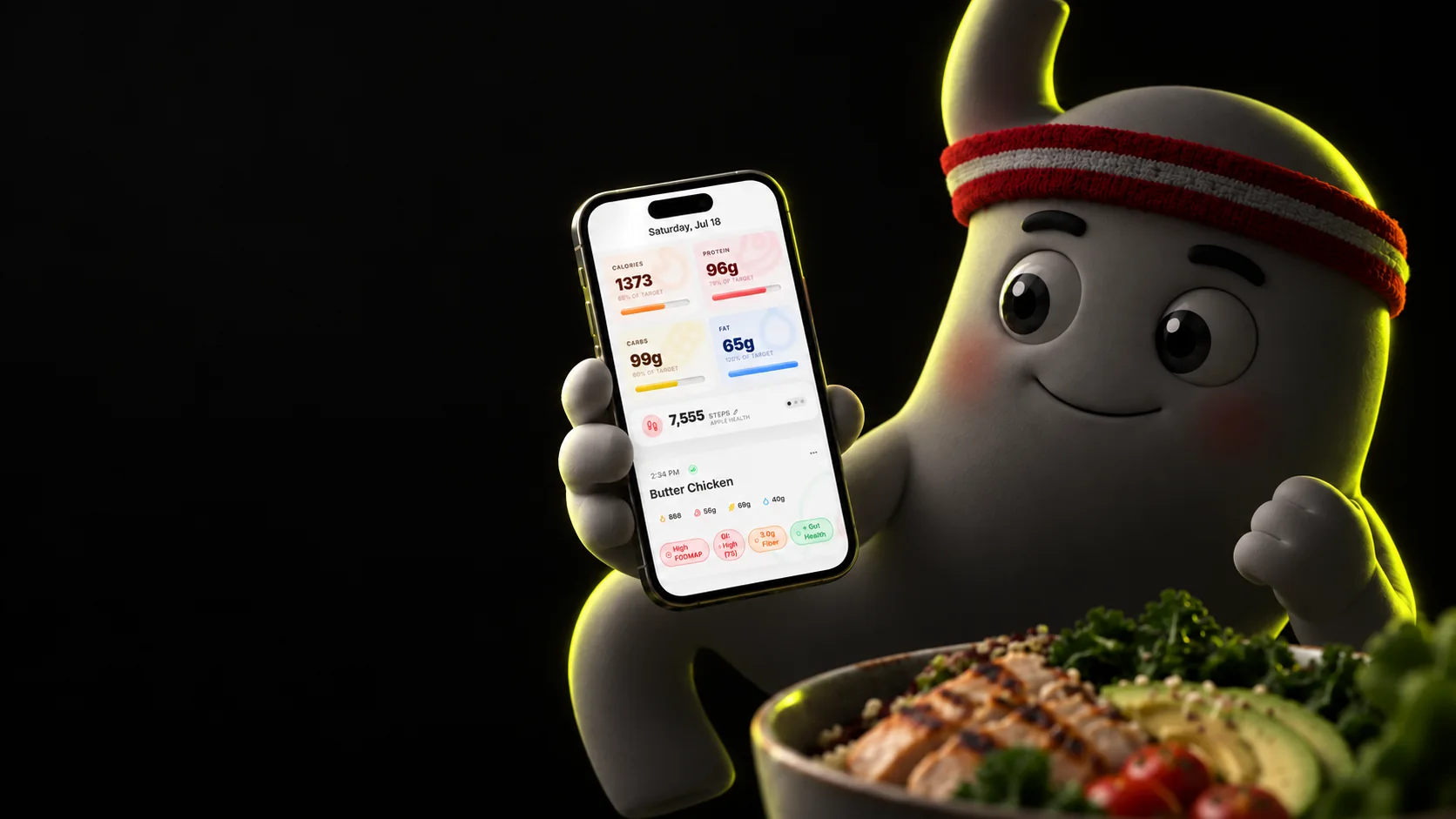
GutCheck: Smart Diet Tracker
Turning a high-friction nutrition diary into a contextual intelligence product.
I built GutCheck from the first product thesis through its AI architecture, security model and release on the App Store.
The friction was the product problem
Traditional food tracking asks people to search databases, estimate portions and turn every meal into administration. It works in theory and breaks down in real life, especially when eating away from home.
GutCheck began with a simple product thesis: logging should take seconds, but the result should become more useful over time. A person can describe a meal or photograph it. The system handles the nutritional interpretation and builds a longitudinal picture rather than leaving the user with an isolated calorie count.
From a meal to contextual intelligence
Text and image inputs are interpreted through Gemini-powered flows that identify the meal, estimate portions and derive macro and micronutrient information. GutCheck also evaluates signals such as fibre, FODMAP and glycaemic index, then combines the food diary with activity and weight data from Apple Health.
The important design decision was not to place a generic chatbot beside a diary. The AI uses the user's history and goals as context, so coaching can look for patterns across meals, activity and progress. The interface still lets the user review the result. AI reduces effort; it does not remove human judgement.
Engineering for a real release
The responsive product was built with Next.js and TypeScript, with Firebase providing authentication, data storage, backend services and hosting. Capacitor packaged the web experience for iOS, while native integration connected GutCheck to Apple Health.
The AI workflow separates generation from review. A primary agent handles multimodal meal interpretation, while an AI auditor performs a second pass on outputs and dietary advice. An internal telemetry view tracks latency and critic-flagged issues, making AI quality something that can be observed and improved rather than assumed.
- Multimodal text and image meal analysis
- Second-pass AI review for output quality
- Context built from nutrition and activity history
- Operational telemetry for latency and critic flags
Security had to be part of the architecture
Nutrition, activity and account data are personal. GutCheck therefore treats protection as a system design concern, not a privacy-policy afterthought.
- Google Authentication and Firebase App Check
- Firestore rules that isolate each user's data
- Least-privilege access between system components
- SSL/TLS encryption for data in transit
- reCAPTCHA v3, DDoS protection and DNSSEC
- User-controlled data export and deletion
From working prototype to public product
GutCheck was released on the App Store and entered the top 50 free Health & Fitness applications during its first week. It currently holds a 5.0 rating across 13 ratings on the Bahrain App Store.
The project also received a Gold tier at the Kanz AI Hackathon. That recognition mattered because it assessed the working product, its evidence and its technical implementation, not only the idea. The next challenge is the less glamorous one: learn from real use, improve reliability and keep making the product simpler.
“The implementation is technically impressive, featuring background AI processing, an integrated AI Coach sync with Apple Health, and a dedicated AI telemetry Admin Hub tracking latency and critic-flagged hallucinations.”
Kanz AI Judge feedback ↗