BIBF · LinkedIn
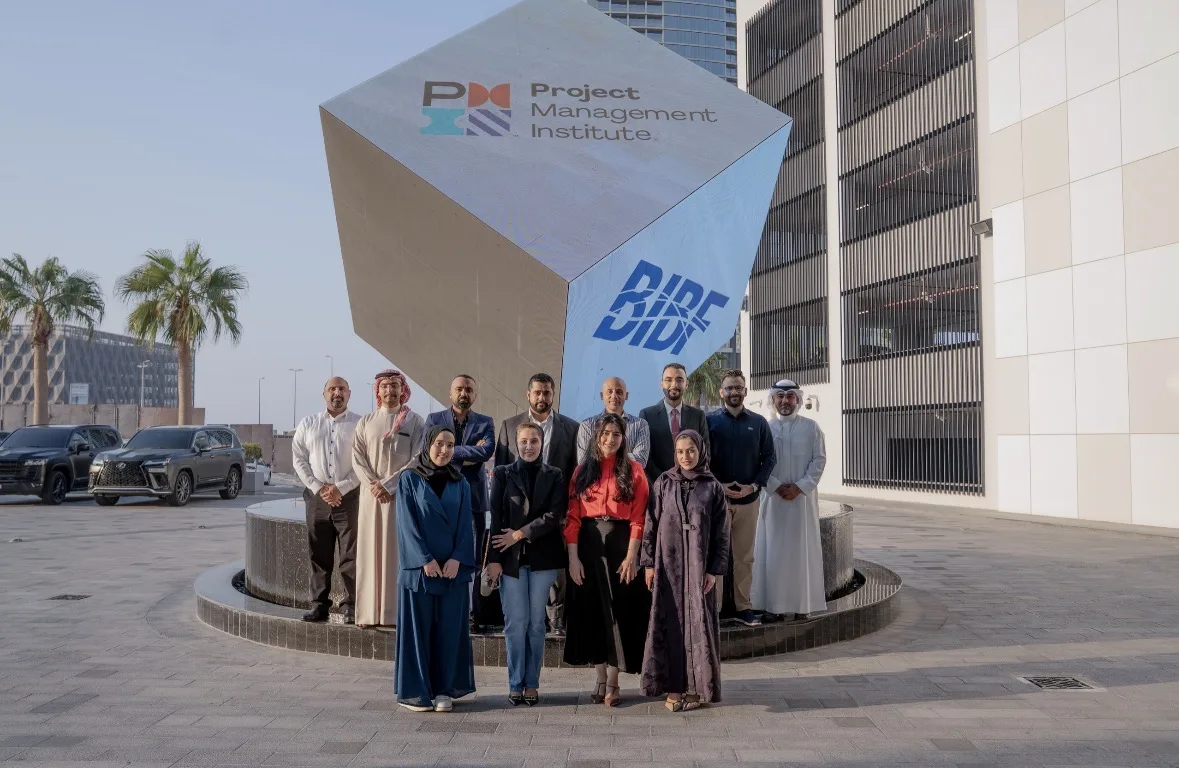
BIBF announces its inaugural PMI-CPMAI cohort
The institute's public announcement about the first five-day cohort and its 12 participants.
Open on LinkedIn ↗
01 · Delivered · October 2026
Designing and delivering the inaugural AI project management certification programme at BIBF, for 12 professionals across Bahrain.
I worked with the Bahrain Institute of Banking and Finance (BIBF) and the Project Management Institute (PMI) to develop the preparatory material and deliver the first PMI-CPMAI programme in Bahrain. The challenge was making a technical AI delivery methodology usable for experienced professionals coming from different disciplines, without simplifying away the difficult parts.
Most professionals have now seen enough AI demonstrations to understand its potential. Managing an AI initiative is another matter. Before a model is selected, somebody has to establish whether there is a genuine business problem, whether AI is necessary, and whether the data exists to support a credible solution.
When BIBF asked me to help introduce PMI-CPMAI in Bahrain, I saw an opportunity to bridge a gap I had encountered in delivery work: capable project managers who know how to manage a programme but have not necessarily had to question a dataset, an evaluation metric or a model's behaviour once it is live.
The work began months before the classroom sessions. I developed preparatory material, completed PMI's trainer requirements and worked with BIBF to organise a programme around the official certification pathway. The audience ranged across financial services, telecommunications and public-sector organisations, with different levels of technical experience.
The teaching went well beyond GenAI prompts. We worked through the six-phase AI project lifecycle: business understanding, data understanding, data preparation, model development, evaluation and operationalisation. I used concrete examples to connect each stage to decisions a sponsor, data scientist or delivery lead would need to make.
The first group brought together 12 professionals from organisations in banking, telecommunications and other sectors. Some worked closely with data and AI; others came from innovation, product and business transformation. The same concepts had to be technically sound and intelligible across that range.
We made the sessions interactive and drew on real delivery situations. The conversations improved the teaching: a data scientist challenged the technical assumptions, while someone from the business side challenged whether the proposed use case would create measurable value. Both questions belong in a well-run AI project.
All 12 enrolled participants completed the five-day course. The BIBF evaluation received 12 responses, recorded an overall score of 4.73 out of 5 and rated the instructor 4.69 out of 5. All 12 respondents said they would recommend the course. This is feedback on the preparation programme, not a claim that participants have passed the separate PMI certification exam.
The feedback also showed where the format needs work. Twenty-five hours across five consecutive late-afternoon and evening sessions was demanding for a technically dense subject. Several participants recommended spreading the learning over more days, with shorter sessions or a morning schedule. I agreed and passed that recommendation to BIBF. Good course delivery should improve the next cohort, not merely close the first one.
What matters to me about this assignment is that we introduced a structured approach to managing AI projects in Bahrain, rather than just another introduction to the technology. BIBF's first PMI-CPMAI programme is complete, and the institute has publicly recognised the inaugural cohort.
I am grateful to BIBF for trusting me with the material development and delivery, and to the participants for the questions and experience they brought into the room. Their next step is the formal certification examination; this programme was designed to help prepare them for it.
The institute's public announcement about the first five-day cohort and its 12 participants.
Open on LinkedIn ↗Why this certification is about technical delivery decisions, data, evaluation and governance, not prompting.
Open on LinkedIn ↗